

If you hear a lot about lactoferrin but still don’t know exactly why it has become an essential component in pregnancy, immunity, and gut health supplements, this is where the story begins; lactoferrin uses today go beyond being a protein found in breast milk, to include supporting iron absorption, strengthening immunity, helping with microbiome balance, and even promising roles in pregnancy and blood health, which we will explain simply and clearly in this article.
What is Lactoferrin?
-
Lactoferrin is an iron-binding protein that belongs to the transferrin family and is naturally found in:
- Breast milk and cow’s milk.
- Saliva, tears, and mucous secretions.
- Some immune system cells.
-
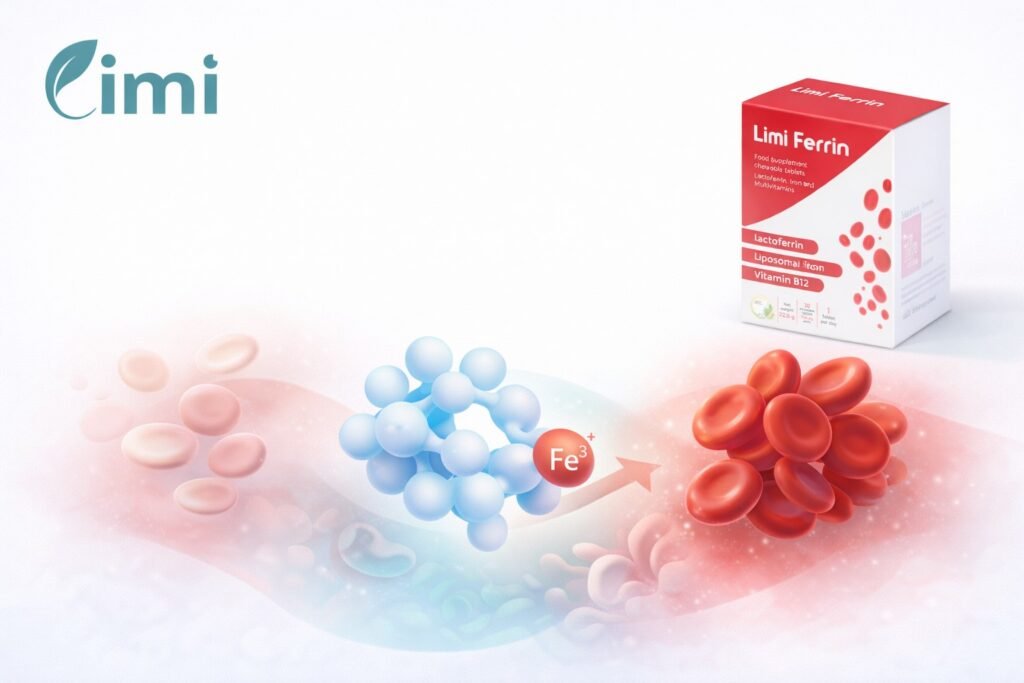
Lactoferrin is characterized by its ability to bind two iron ions (Fe³⁺) per molecule, making it an important element in:
- Regulating iron availability in the body.
- Depriving bacteria and viruses of the iron they need to grow.
-
Research indicates that it has properties that are:
- Antibacterial and antiviral.
- Anti-inflammatory and antioxidant.
- Immunomodulatory.
This background is the basis for most lactoferrin uses in medicine and nutrition.
General Lactoferrin Uses and Key Benefits
1. Iron Regulation and Supporting Iron Deficiency Anemia Treatment
One of the most famous lactoferrin uses is its role in treating iron deficiency anemia, especially in pregnant women:
-
Studies compared lactoferrin with traditional iron compounds (such as ferrous sulfate) in pregnant women with iron deficiency anemia, and showed:
- Improvement in hemoglobin and iron stores.
- With fewer digestive side effects and better treatment acceptance in many patients.
- This doesn’t mean lactoferrin is a suitable alternative for everyone, but it’s an option that some doctors may prefer in certain cases, especially when women suffer from intolerance to traditional iron forms.
Important: No iron supplement or lactoferrin should be used to treat anemia without a medical diagnosis, tests, and evaluation.
Read also: Pregnancy and Maternal Needs | Essential Supplements like Limi Cal D and Limi Ferrin
2. Antibacterial and Antiviral Properties
Among the central uses of lactoferrin:
-
Acting as a natural immune component:
- It deprives bacteria of the iron necessary for their growth.
- It interferes with the bacterial cell wall and may weaken it.
- In some experiments, it appeared that it may limit the adhesion of some viruses to cells or their entry into them.
Because of these properties, lactoferrin is being studied as an adjuvant supplement in:
- Some viral infections.
- Supporting immunity in those with higher susceptibility to infection.
But, so far, it is not considered an independent treatment for any infection, but a potential adjuvant factor within a comprehensive medical plan.
3. Immune Modulation and Inflammation Reduction
One of the interesting aspects of uses of lactoferrin is its role in:
-
Modulating immune response:
- Some studies found that it can reduce the production of some inflammatory cytokines such as IL-6 under certain conditions.
-
Anti-inflammatory effect:
- It helps calm chronic low-grade inflammation, which is linked to several diseases such as obesity and some metabolic disorders.
This effect is still under study, but it makes lactoferrin an important element in immunity and inflammation research.
4. Supporting Digestive Health and Microbiome
The intestines are one of the most important places where lactoferrin works:
-
Lactoferrin can act as a type of prebiotic (Prebiotic-like);
- It supports the growth of some beneficial bacteria, such as Bifidobacteria and Lactobacilli in various experiments.
-
Research indicates that it may:
- Help reduce some intestinal disorders related to inflammation or infection
- Contribute to reducing diarrhea in infants in the context of iron-fortified nutrition in some studies.
- There is also early data that iron-saturated lactoferrin may help maintain microbiome diversity in elderly people in laboratory models.
All this makes lactoferrin a potential element in products supporting gut health, but while keeping the role of diet as a fundamental factor.
For more, check out: Probiotic Treatment for Diarrhea: How to Restore Your Gut Balance and Get Rid of Symptoms?
5. Potential Effects on Metabolism and Insulin Resistance
Some studies have linked lactoferrin supplements with:
- Improvement in some indicators of insulin resistance.
- Slight decrease in visceral fat or waist circumference in specific patient groups.
But these results are still:
- Limited in the number of studies.
- Often on small samples.
- Need larger trials before considering lactoferrin a stable element in obesity or diabetes treatment protocols.
So it can be said that this field is promising but not yet settled.
6. Lactoferrin Uses in Pregnancy and Fetal Health
In recent years, research on lactoferrin uses during pregnancy has increased:
-
In cases of iron deficiency anemia in pregnant women:
- Trials showed that lactoferrin may raise hemoglobin and blood iron with effectiveness close to or sometimes better than some iron salts, with fewer digestive side effects in many women.
-
Scientific reviews indicate that lactoferrin has potential roles in:
- Regulating inflammation during pregnancy.
- Supporting iron balance.
- Contributing to a more stable pregnancy environment in terms of immunity and microbiome.
- There are also exploratory studies investigating the use of lactoferrin to reduce some cases of preterm birth in high-risk groups, but the results are still preliminary and need confirmation.
The summary here:
Lactoferrin during pregnancy may be beneficial under medical supervision, especially in the context of iron deficiency anemia or inflammatory disorders, but it is not an official “pregnancy stabilizer” and is not used for this purpose in an approved manner.
Lactoferrin Uses in Fertility and Pregnancy: Between Hope and Scientific Reality
Lactoferrin uses in the field of fertility have attracted attention, but the picture is still incomplete:
-
At the ovarian and follicular fluid level:
- Some studies linked higher levels of lactoferrin in follicular fluid with better quality of eggs or embryos in assisted reproduction procedures.
- Other studies did not find the same association clearly.
- Result: The role is still not settled, and there are no stable recommendations based on these results alone.
-
At the reproductive microbiome and implantation level:
- Small studies explored using lactoferrin to improve vaginal or endometrial microbiome status in cases of recurrent implantation failure, with some positive results in limited groups.
- The researchers themselves point to the need for larger and more rigorous trials before generalizing these results.
-
As a pregnancy stabilizer or miscarriage prevention:
- There is currently no strong evidence sufficient to say that lactoferrin “stabilizes pregnancy” directly in humans.
-
It may contribute indirectly through:
- Immune support.
- Reducing inflammation.
- Improving iron status and microbiome.
But its use for this purpose should be part of a dialogue with a specialist doctor, not individual judgment.
Scientific Challenges and Limitations Regarding Lactoferrin Uses
Despite the diversity of lactoferrin uses, there are points to pay attention to:
- Lack of large human trials in some areas (especially fertility and implantation).
- Variation in doses and forms used between studies makes comparison difficult.
- Result variation: some studies are positive, others neutral.
-
Lack of official recommendations for using lactoferrin as an independent primary treatment in conditions such as:
- Pregnancy stabilization.
- Infertility treatment.
- Treatment of specific chronic diseases.
So it’s better to treat it as a supportive supplement within a treatment plan, not as a replacement for proven treatments.
How Can Lactoferrin Supplements Be Taken Safely? (General Guidelines)
This information is educational and does not replace consulting a doctor or reading the product leaflet.
-
Consult your doctor before starting any supplement containing lactoferrin, especially if:
- You are pregnant or breastfeeding.
- You suffer from chronic diseases (kidney, liver, immune…).
- You take other medications regularly.
- Stick to the dose recommended by the doctor or leaflet, and don’t assume that “more is better”.
-
Monitor any unusual symptoms:
- Mild digestive disturbances may occur in some people.
- In case of allergy to cow’s milk proteins, caution should be taken with products containing bovine lactoferrin, and this should be discussed with the doctor.
Limi Ferrin – A Practical Source of Lactoferrin and Iron
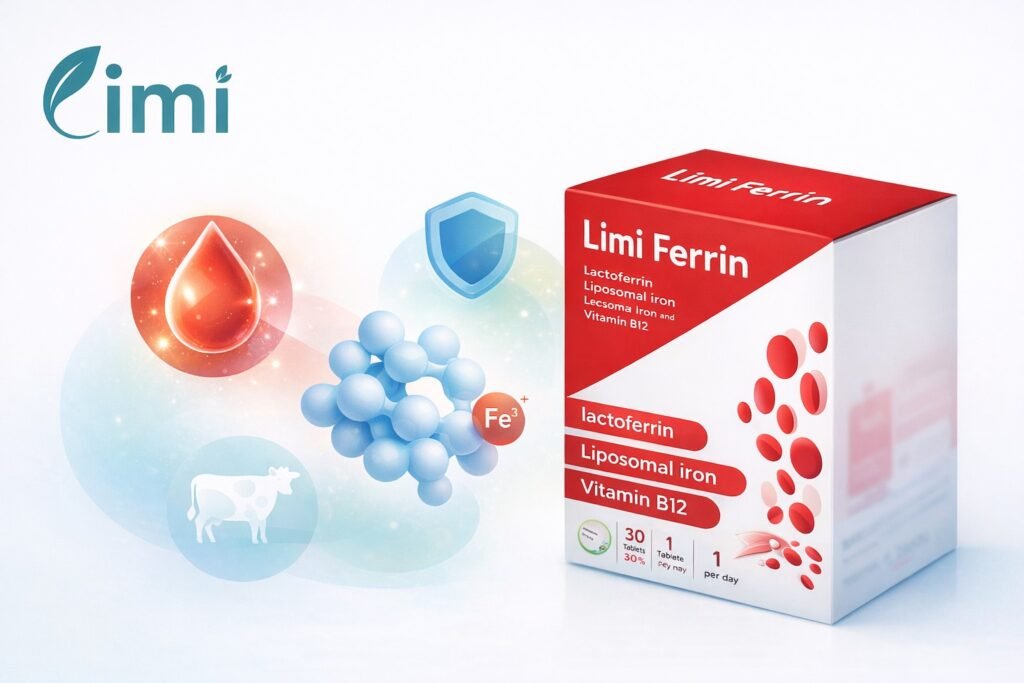
Among available products, Limi Ferrin comes as a supplement that combines:
- Bovine lactoferrin.
- Liposomal iron (a studied form of iron to improve absorption and reduce stomach disturbances).
- Vitamin C to support iron absorption and immunity.
- Vitamin B12 helps form red blood cells and nerve health.
A doctor may recommend it in contexts such as:
- Supporting treatment of iron deficiency anemia.
- Special needs such as pregnancy or breastfeeding (according to tests and evaluation).
- Those suffering from general fatigue or hair loss related to iron deficiency or malnutrition.
Limi Ferrin’s role here is to provide an organized source of both lactoferrin and iron in one capsule or tablet, as part of a plan set by the doctor, not as a standalone treatment for all problems.
Frequently Asked Questions About Lactoferrin Uses
Q: Are lactoferrin uses safe for daily use?
Generally, research indicates that lactoferrin supplements in moderate doses used in studies are well tolerated by most people, including pregnant women in certain trials, without clear toxicity effects being observed.
But actual safety depends on:
- Your health condition.
- The dose.
- Duration of use.
So the doctor’s opinion remains the basis.
Q: Can lactoferrin alone be relied upon to treat iron deficiency anemia?
No, in most cases:
- Lactoferrin uses with or instead of some iron forms under medical supervision, depending on tests and response.
- There are studies that showed it may be effective in treating iron deficiency anemia in pregnant women, sometimes with fewer side effects than some iron salts, but the final decision is up to the doctor.
Q: Do lactoferrin uses help stabilize pregnancy?
Current evidence:
-
Points to potential benefits in:
- Immune support.
- Iron regulation.
- Reducing some inflammation markers.
- But there is not yet sufficient evidence to consider it a direct pregnancy stabilizer or official treatment for recurrent miscarriage.
It can be part of an immunity and healthy pregnancy support plan set by the doctor, not a replacement for recognized examinations and treatments.
Q: Can lactoferrin uses be considered as fertility supplements like Limi Ferti?
Theoretically, the doctor may see benefit in combining different supplements (such as Limi Ferti to support hormonal balance, and Limi Ferrin as a source of lactoferrin and iron) in some cases, suffering from fertility problems and nutritional deficiencies at the same time.
However:
- You should not create a “supplement cocktail” yourself.
-
The doctor or fertility specialist is the one who evaluates:
- The actual need for each supplement.
- The doses.
- Potential interactions.
Q: Do lactoferrin uses have side effects?
Usually, side effects — if they appear — are mild, and may include:
- Slight stomach discomfort.
- Feeling of fullness or gas.
In case of allergy to milk or cow’s milk proteins, the doctor should be informed before using products containing bovine lactoferrin.
Q: Where do lactoferrin uses stand today?
Lactoferrin is an amazing molecule that combines:
- Iron regulation.
- Immune support.
- Antimicrobial and anti-inflammatory properties.
- And a potential role in gut health, pregnancy, and metabolism.
But although lactoferrin uses are wide and promising, science is still in the process of completing the picture, especially in:
- Fertility.
- Pregnancy stabilization.
- Some chronic diseases.
The wise step is always:
If you think of a supplement containing lactoferrin uses— such as Limi Ferrin — start with your doctor: ask about its suitability for your condition, the appropriate dose, and duration of use, then make it part of a balanced health plan that includes good nutrition, exercise, and regular medical follow-up.